Car key replacement in Glen Burnie
Three things decide this job and none of them is the locksmith: what the vehicle is, what kind of key it takes, and whether any working key still exists.
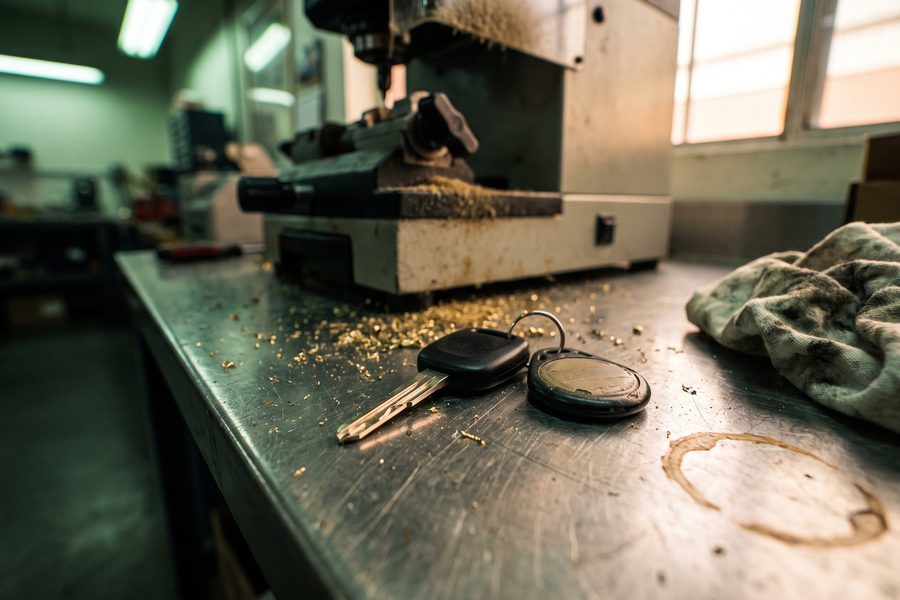
Three kinds of car key, three different jobs
Almost every confusion about car key pricing comes from treating these as one service. They are not.
- A plain metal blade. Older vehicles, and the valet or spare key on some newer ones. Pure cutting, no electronics. This is the cheapest and fastest of the three, and it is the only one a hardware counter has any business attempting.
- A transponder key. Looks like a metal key with a thicker plastic head. Inside that head is a chip that answers a challenge from the vehicle's immobiliser. Cut the blade perfectly and the door will open and the key will turn — and the engine still will not start, because the chip was never paired. Cutting and programming are two separate operations and both are required.
- A proximity fob or push-to-start. No blade turns anything; the car detects the fob. These are programmed to the vehicle, usually with a physical emergency blade hidden inside for the door. This is the most involved of the three and the one where the vehicle's own security procedure dictates how long it takes.
Telling the phone which of the three you have — or simply the year, make and model, which implies it — is the single most useful thing you can do.
What the vehicle decides
The technician does not set the difficulty here. The manufacturer did, years ago, and the variation between makes is larger than most drivers expect.
Some vehicles accept a new key added through the on-board diagnostic port in a few minutes. Others enforce a security delay — a deliberate waiting period, sometimes ten minutes, sometimes the better part of an hour, during which the car simply refuses to enrol a new key. That delay is an anti-theft feature working exactly as designed, and nobody can shorten it. Certain makes require the immobiliser data to be read from a module rather than typed in. A few late-model vehicles, particularly some manufactured after the mid-2010s push toward encrypted rolling codes, restrict key origination to the dealer entirely.
This is why a phone quote given without the year, make and model is not a real quote. The same words — "replace my car key" — describe a fifteen-minute job on one car and a two-hour job with a dealer referral on another.
Mileage and geography matter less than people think, but they are not nothing. Glen Burnie sits on the I-97 corridor between Baltimore and Annapolis with BWI Marshall just north, so a meaningful share of automotive calls here involve a vehicle that is not at home — airport long-stay parking, the Cromwell light rail lot, or a car that made it to a Ritchie Highway lot and no further.
What a key kiosk and a hardware counter can actually do
There is a self-service key kiosk inside a Glen Burnie grocery store, and the big-box hardware chains all cut keys. These are legitimate services and they are cheaper. The question is only what they cover.
They duplicate; they rarely originate. Copying an existing working key is what a kiosk or a counter machine does well. Creating a key where none exists — from the vehicle identification number, or by reading the lock — is a different operation requiring different equipment and, for a vehicle, access to the immobiliser.
Plain blades: usually fine. A house key or an old bladed car key copied at a counter will generally work. If it sticks, it is often the machine's alignment or a worn original rather than the blank.
Transponders: half the job at best. Some counters will cut a transponder blade and a few will sell a blank chip key. Cutting is not programming. A key that opens the door and turns in the ignition but will not start the engine is the classic symptom of a blade cut without the chip being paired, and it is the most common reason someone ends up calling a locksmith after already paying for a key.
Proximity fobs: generally no. Some kiosks now offer fob duplication for a narrow list of vehicles, and a cloned fob can work where the system permits cloning. Many do not permit it. Check the specific vehicle before relying on it.
The reasonable summary: for a spare copy of a key you already hold, a kiosk or a counter is a sensible first stop. For a key that does not exist yet, or a car that will not start, it is a detour.
When every key is gone
"All keys lost" is its own category and it is worth naming on the phone, because it changes the method. With no working key to copy, the key has to be originated — generated from the vehicle's own data, then cut, then programmed.
Expect to prove the vehicle is yours. Registration or title, plus photo identification matching it. This is not obstruction; originating a key for a car is exactly the capability that would make vehicle theft trivial if it were handed out on request, and the trade takes it seriously.
It is also worth deciding, at that moment, whether to have the old keys invalidated. If a key is lost rather than broken — left in a returned rental, dropped somewhere public, gone with a former household member — a new key alone does not stop the old one working. Most vehicles allow the immobiliser to be re-enrolled so that previously paired keys stop starting the car. If the key is genuinely lost rather than merely missing, that is usually the right call, and it is cheaper done in the same visit than as a second appointment.
The same logic applies to doors, which is on the homes and businesses page.
Before the van is dispatched
- Year, make and model. Not "a Honda" — the year matters as much as the badge.
- Which key type, if you know: blade, fob with buttons, or push-to-start.
- Does any working key still exist? A spare at home counts and can change the method entirely.
- Where the car is, precisely. Lot name and end of the lot, or street and cross street.
- Whether the car is drivable and legally parked. A vehicle in an airport structure or a towing-enforced lot has a clock on it that changes the order of operations.
- Ask for the total, including programming, not just the call-out. Cutting quoted alone is the most common source of a surprise at the end.
Frequently asked
Can AutoZone or a hardware store replace a key fob?
Sometimes, partly. Some counters sell and cut blanks, and some kiosks clone fobs for a narrow list of vehicles.
The distinction that catches people is that cutting is not programming. A key that opens the door and turns in the ignition but will not start the engine is the signature of a blade cut without the chip being paired. Check whether the specific vehicle supports cloning before relying on it.
Will Home Depot duplicate car keys?
They duplicate plain metal keys reliably, and can cut some transponder blanks.
What they do is duplicate an existing working key, not originate a new one, and they generally cannot pair a transponder or proximity fob to the vehicle's immobiliser. If you hold a working key and want a spare blade, it is a reasonable first stop. If no key exists, or the car will not start, it is a detour.
How much should a replacement car key cost?
There is no single figure, and the reason is the vehicle rather than the locksmith.
A plain blade is cutting only. A transponder is cutting plus programming — two operations. A proximity fob follows the manufacturer's security procedure, which on some vehicles includes a mandatory enrolment delay nobody can shorten. Give the year, make and model on the phone and ask for the total including programming.
Can a locksmith make a car key with no original?
Usually yes. With no key to copy, the key is originated from the vehicle's own data, then cut, then programmed.
Expect to prove the car is yours — registration or title plus matching photo ID. That check is the reason the capability is not abused. A small number of late-model vehicles do restrict origination to the dealer, which is worth establishing on the phone rather than in the lot.
If my key was stolen, does a new key stop the old one working?
Not on its own. A new key is just one more key the car accepts.
Most vehicles allow the immobiliser to be re-enrolled so that previously paired keys stop starting it. If the key is genuinely gone — left in a returned rental, lost in public, or with a former household member — that is normally the right call, and it costs less done in the same visit than as a second appointment.
Tell the phone three things and the right call goes out
Most wasted visits come from a single missing detail. These three sort the job before anyone leaves.
- Where you are. A street and cross street, or the lot and level. Glen Burnie has several large shared lots — Harundale Plaza, the Cromwell light rail park-and-ride, the Ritchie Highway strips — and naming the wrong one costs twenty minutes.
- What is locked. A car, a house door, a storm door, a safe, a mailbox or a storefront. Each one sends a different kit.
- For a vehicle: year, make, model, and whether the key is a metal blade, a fob with buttons, or push-to-start. That decides whether the job is cutting, programming, or both.