Home and business locksmith in Glen Burnie
Rekeying on turnover, deadbolts that actually anchor, storm doors, smart locks and storefront hardware — fitted to what is genuinely behind the door here.
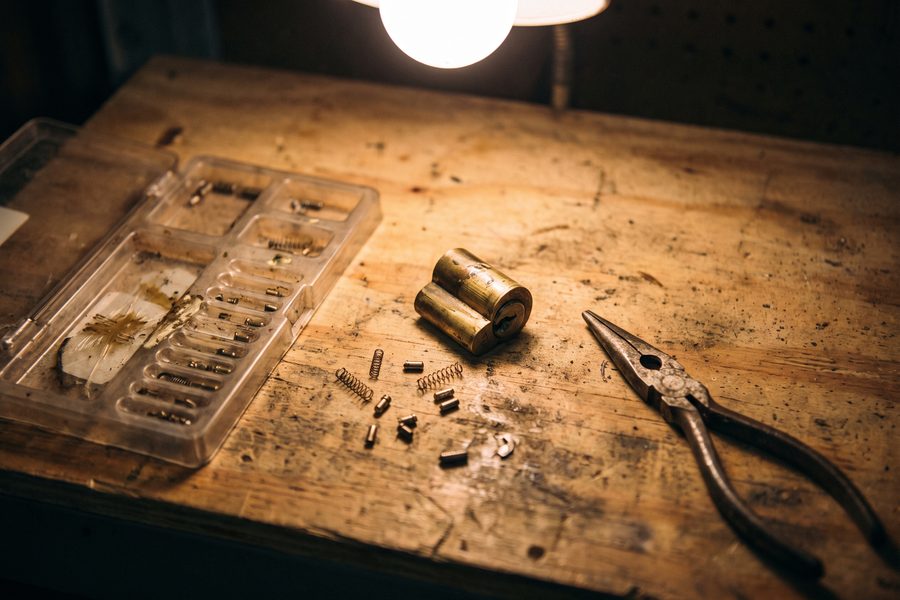
Rekeying is the volume here, and turnover is why
Rekeying changes which key opens a lock without replacing the lock. The cylinder comes apart, the pin stack is changed, and the old key stops working. It is faster and cheaper than new hardware, and for most of the reasons people want their locks changed, it is the correct answer rather than the budget one.
Glen Burnie generates a steady amount of it because of how the housing is held. Harundale was split from the day it was built — the western section largely rental, the eastern owner-occupied — and that mixed pattern runs through Ferndale, Brooklyn Park and much of the surrounding county. Rentals turn over. Every turnover is a set of keys whose copies nobody can account for.
The moments that genuinely call for it: a tenant moving out, a house purchase completing, a lost or stolen key, a contractor or cleaner who held a key during works, a former household member after a separation, and any door where the key has been copied more times than anyone remembers.
One thing worth knowing about a house purchase in particular. The previous owner's keys are only part of it — agents, contractors, relatives and neighbours may all hold copies from the years before the sale. Rekeying every exterior cylinder to a single new key on the day of the move is one of the few security jobs that is both cheap and genuinely complete.
Why the frame matters more than the lock
This is the part that is specific to this part of Anne Arundel County, and it changes what hardware belongs on the door.
A great deal of Glen Burnie went up in one post-war wave. Harundale, begun in 1947 by the Byrne Organization on a three-hundred-acre site with its own prefabrication shop, put up roughly twelve hundred homes — among the largest prefabricated housing projects in the country at the time. They were built on welded steel frames, set on concrete slabs, with plaster interior walls and in-floor radiant heat.
In a conventional wood-framed house, a deadbolt's resistance to being kicked in comes mostly from one thing: long screws through the strike plate into the structural stud behind the jamb. The lock is rarely the weak point; the fixing is. That is why a solid deadbolt fitted with short screws into trim alone offers far less than the box implies.
A steel-framed opening does not present that stud. The anchoring has to go into the frame itself, the fixings have to suit steel rather than timber, and a strike fitted as though there were a stud behind it is fixed into nothing. It is not harder work — it is different work, and it is the difference between hardware that performs as rated and hardware that only looks the part. If a house is from that era, saying so on the phone is useful.
Slab construction shows up at the threshold. With no crawl space beneath, doors sit close to a surface that moves with frost and summer heat. A door that binds in February and swings freely in July is reporting on the slab and the frame, not the cylinder — and replacing the lock will not fix it. The honest fix is adjustment, and sometimes a threshold or hinge job rather than a lock job at all.
Deadbolts, storm doors and smart locks
Deadbolts. The grade of the lock matters less than most marketing suggests once the fixing is right. A throw that fully extends into a properly anchored strike, with screws long enough to reach structure, is the substance of it. Ask what the strike is being fixed into — on a steel frame the answer should not be "the trim".
Storm and screen doors. Common across the post-war stock here and frequently the actual problem. Their locks are light, their frames are thin aluminium, and they rack out of square as the seasons change. A storm door that has to be pulled hard to latch is usually a frame alignment issue. It is also the door most often damaged by a forced entry attempt during a lockout, which is a good reason not to attempt one.
Smart locks. Sensible in a rental or a household with changing access, because codes can be issued and revoked without cutting metal. Two cautions. First, the same fixing rule applies — a smart deadbolt anchored into nothing is exactly as weak as a dumb one anchored into nothing. Second, check the door's thickness and bore before buying, and on a steel frame check the strike arrangement, because retrofits assume a standard timber opening more often than the packaging admits.
Mailboxes. Worth mentioning because it comes up and the answer surprises people: for a standard residential box the lock is usually replaceable by a locksmith, but for a shared cluster unit serving multiple addresses the postal service controls the master arrangement, and that is a different route entirely.
Commercial doors and keying that scales
Commercial work along the Ritchie Highway and Crain Highway corridors is mostly storefront and small office, and it runs on different hardware from a house.
Storefront cylinders and closers. Aluminium-and-glass entrances use mortise or rim cylinders rather than residential deadbolts, and the door closer is as often the fault as the lock. A door that no longer latches unless pushed is usually a closer or an alignment problem.
Panic and exit hardware. Required on certain occupancies and governed by fire and life-safety rules rather than preference. Exit hardware must allow egress without a key, always, and anything that defeats that — including a well-meant padlock added after a break-in — is both a code issue and a genuine danger.
Master key systems. The point is a hierarchy: one key for the whole premises, others that open only what a given role needs. Worth designing before it is installed rather than assembled piecemeal, because a system that grew by accident usually has a key somewhere that opens more than anyone intended.
Access control. Fobs and codes make sense where staff turn over, for the same reason they do in rentals: revoking a credential beats recovering a key. The underlying mechanical lock still has to be sound, and on a glass storefront the frame and the closer still decide whether any of it holds.
Frequently asked
Should I rekey or replace my locks?
Rekey when the hardware is sound and only the key needs to change — a completed purchase, a tenant turnover, a lost or stolen key, a contractor who held one during works.
Replace when the lock itself is worn, damaged, or simply the wrong hardware for the door. For most of the reasons people say they want their locks changed, rekeying is the correct answer rather than the cheap one.
Why does my door stick in winter but not in summer?
That is the frame talking, not the lock. Slab-built houses — most of the post-war stock here — have no crawl space, so the opening sits close to ground that moves with frost and summer heat.
The door racks seasonally and the bolt stops meeting the strike cleanly. Replacing the cylinder will not fix it. Adjustment of the door, the hinges or the threshold will, and that is a cheaper job than the one people usually ask for.
Do I need special hardware for a steel-framed door?
The lock itself is often standard. The fixing is the part that differs.
In a wood-framed house a deadbolt's real strength comes from long screws reaching the stud behind the jamb. A steel frame — as in the 1947 Harundale homes and much of the post-war stock — offers no such stud, so the strike has to be anchored into the frame with fixings suited to steel. Fitted as though a stud were there, it is fixed into nothing.
How soon should I rekey after buying a house?
On the day of the move, ideally before the first night.
The previous owner's keys are only part of the picture — agents, contractors, relatives and neighbours may hold copies accumulated over years, and none of that appears at closing. Rekeying every exterior cylinder to a single new key is inexpensive, quick, and one of the very few security jobs that is genuinely complete when it is finished.
Can a padlock be added to a commercial exit door?
No, and this is one of the few places where the answer is flatly no rather than it depends.
Exit and panic hardware must permit egress without a key at all times under fire and life-safety rules. A padlock or chain added after a break-in defeats exactly that, and it is both a code violation and a genuine danger to anyone inside. The correct response is better hardware, a repaired closer, or access control — never a secondary lock on the egress path.
Tell the phone three things and the right call goes out
Most wasted visits come from a single missing detail. These three sort the job before anyone leaves.
- Where you are. A street and cross street, or the lot and level. Glen Burnie has several large shared lots — Harundale Plaza, the Cromwell light rail park-and-ride, the Ritchie Highway strips — and naming the wrong one costs twenty minutes.
- What is locked. A car, a house door, a storm door, a safe, a mailbox or a storefront. Each one sends a different kit.
- For a vehicle: year, make, model, and whether the key is a metal blade, a fob with buttons, or push-to-start. That decides whether the job is cutting, programming, or both.